
What do parents remember after a call to your school? Not the phone system. They remember whether someone answered, whether the call moved fast, and whether they got a clear answer without being bounced around.
That is where the gap shows. Many schools still run on old setups that were built for a smaller office, a smaller campus, and a slower day. Now the front office handles admissions, attendance, transport, health office calls, fee questions, and urgent updates at the same time. Delays pile up. Messages slip. Staff starts using workarounds.
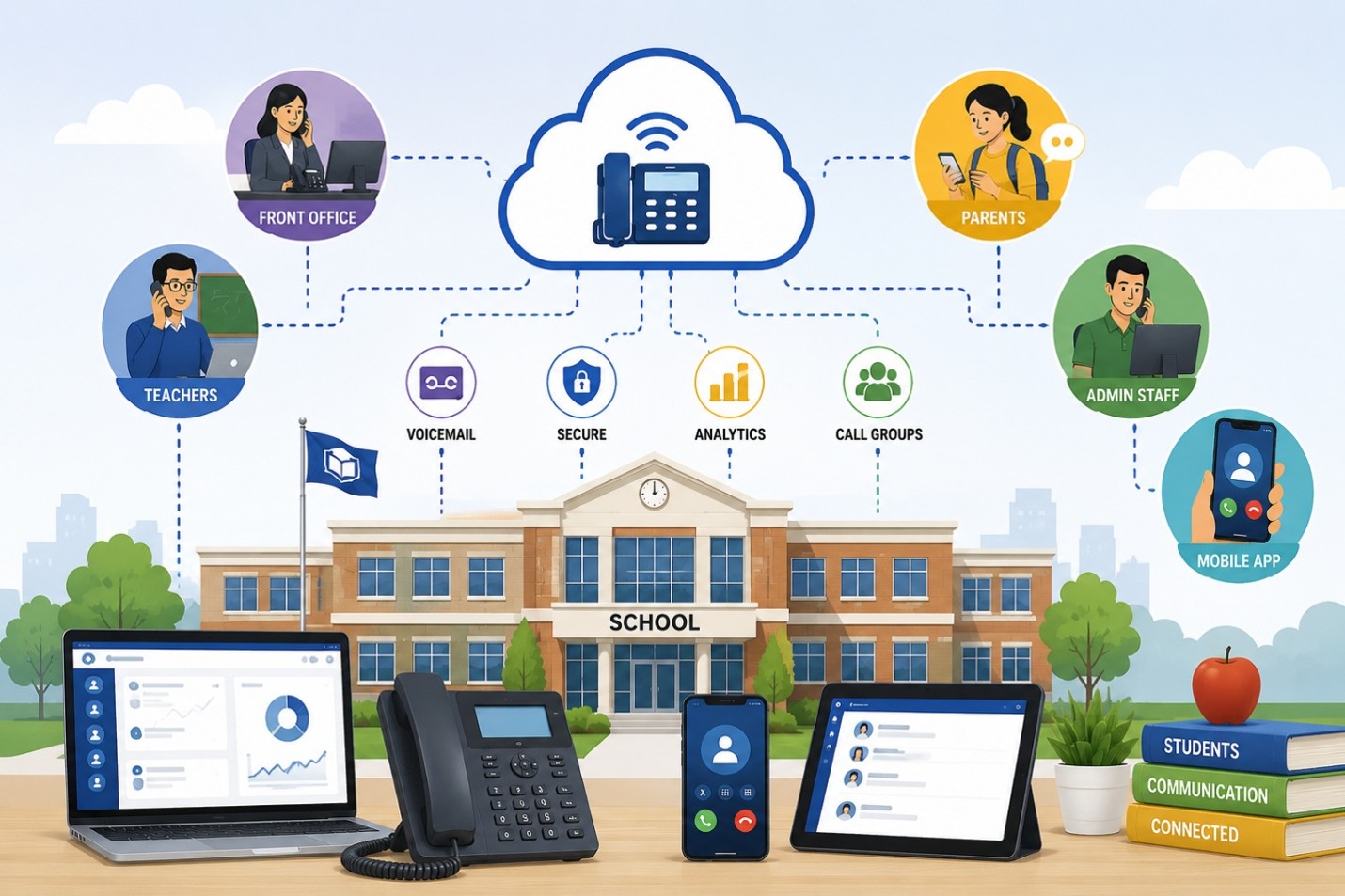
So, how does hosted PBX help schools? It replaces a rigid phone setup with a cloud-based communication system that routes calls better, keeps teams connected across locations, and gives administrators a cleaner way to manage daily communication without piling on more hardware.
Why Schools Are Rethinking Their Communication Systems
Schools do not have one communication lane. They have many. A parent may call about attendance. A driver may need the transport desk. A counselor may need a quick transfer from reception. A principal may need a campus-wide message pushed out fast.
Legacy systems break down in that kind of environment. They create bottlenecks at the front office, weak call visibility, and uneven service across departments or campuses.
| School communication issue | What a hosted PBX changes |
| Calls stack up at reception | Smart routing moves callers to the right person faster |
| Campuses work separately | One system connects extensions, voicemail, and call flow |
| Old hardware keeps failing | Cloud delivery cuts on-site phone equipment pressure |
| Staff leave their desks | Mobile and browser access keep them reachable |
| Urgent messages move slowly | Alerts, routing paths, and paging links speed response |
Once school leaders look at communication as an operations problem, not just a phone problem, the case for change gets much stronger.
How Hosted PBX Phone Services Improve Daily School Communication
A hosted PBX system changes the school day in small but important ways. Calls reach the right desk faster. Staff do not chase voicemails as much. Admin teams get more control over what happens during busy hours.
How does Hosted PBX Help Schools? Faster Parent-Teacher Connection Without Delays
Parents do not want a long transfer chain. They want quick contact with attendance, admissions, the front office, or a teacher’s line when policy allows it. Hosted PBX makes that easier through call routing, ring groups, voicemail-to-email, and shared directories. It trims dead time out of the process. That alone can improve how families judge the school.
Centralized Call Handling Across Departments and Campuses
A school district with more than one campus often ends up with patchy communication. One office answers fast. Another misses calls. A third has no clue what was transferred and why. How does hosted PBX help schools? It brings those scattered pieces into one managed system, so departments, offices, and campuses work from the same call structure instead of separate habits.
Reliable Emergency Communication and Instant Alerts
When something urgent happens, the phone system cannot become the weak point. Schools need fast escalation, paging links, and clear routing paths for urgent calls. How does hosted PBX help schools? It gives administrators a cleaner framework for emergency communication, including e911 workflows, alerts, and campus-wide coordination that do not depend on one front desk phone.
Flexible Access for Staff Inside and Outside School Premises
School staff move all day. They work across classrooms, offices, sports areas, parking zones, and transport points. A cloud phone system lets them stay connected through desk phones, browser calling, softphones, or mobile apps. That keeps communication moving even when staff are not sitting near one handset.
Cost Control Without Heavy Hardware Investment
Old phone infrastructure drains school budgets slowly. Hardware ages out. Service contracts grow. Expansion becomes awkward. How does hosted PBX help schools? It cuts the need for large on-site PBX hardware and separate telecom setups at every location. Schools can scale users and locations without rebuilding the whole system each time.
Better Call Tracking and Administrative Visibility
School administrators need more than dial tone. They need call records, missed call visibility, queue patterns, and a way to review service quality. Hosted platforms can show where calls pile up, which departments need support, and whether parent communication is being handled on time. That helps office teams fix gaps before families start complaining.
How does Hosted PBX Help Schools? What Makes Hosted PBX a Strong Fit for Modern Schools
Modern schools expect more from communication. They need phone access across devices, faster handoffs between departments, and a way to support both routine and urgent contact without leaning on outdated systems.
That is why hosted PBX services for schools fit current needs well. They help districts standardise communication across campuses, reduce missed calls, and keep staff reachable without chaining every task to the front office. They also make it easier for lean IT teams to manage users, routing, voicemail, and reporting from one place instead of dealing with aging hardware room by room.
How Schools Work Smarter With SQUIBIT ® Hosted PBX Solutions
At SQUIBIT ®, we bring calling, business texting, CRM integrations, branded calling, advanced call recording, and AI-powered sentiment analysis into one platform. We make it easier for schools to use communication tools across desktop phones, browsers, and mobile apps, so administrators and staff can stay connected without juggling separate systems.
A few school-ready strengths stand out:
- We centralize communication across campuses and departments
- We simplify call routing, improve visibility into reports, and reduce hardware pressure
- We bring voice, text, and communication management into one system
At SQUIBIT ®, we focus on the daily flow of communication, not just the call itself. We do that because schools need speed, continuity, and cleaner oversight across everyday operations.
Conclusion
School communication affects parent trust, staff coordination, emergency response, and the pace of the whole day. When the phone system slows those things down, schools feel it everywhere. A hosted PBX setup fixes that at the system level, not with another patch. If your team keeps asking, how does hosted PBX help schools? The answer is simple: it helps schools respond faster, stay connected across locations, and manage communication with far less friction.
Talk to SQUIBIT ® if your school wants a platform built for daily communication, and let us help you move forward.
FAQs
1. If schools switch, will they be able to retain their existing phone numbers?
Yes. Schools generally do not have to update published contact info because most providers will be capable of porting existing numbers.
2. Does hosted PBX work for small school districts?
It can be used by No. Small private schools, charter schools, and multi-campus districts.
3. If there is a surge in calls during the admission season, what will be the effect?
Hosted systems can route calls by team, queue, or schedule, which facilitates schools in dealing with peak periods more effectively.
4. Is the system available for use by school staff away from their desk?
Yes. Staff are often able to use browser calling, mobile apps, or softphones when they are on the move around campus.
5. Can hosted PBX integrate with other school communication apps?
Depending on the setup, many systems are able to be integrated with CRM, messaging, paging, and admin.